

Are government tenders worth it?
Bid when you can evidence every mandatory line, the winning price still leaves a margin, and the complete offer can be filed before the deadline.

A government tender is worth a bid when you can evidence every mandatory line, the price you would need to win still leaves a margin, and a complete offer can be filed before the deadline. If a mandatory line is open, and the notice does not let another entity close it, more writing does not make that contract worth the days.
Ask four questions before anyone opens a draft
- Can you show each mandatory selection line today, from documents the company already has?
- Where a line is missing, does this notice allow another entity to cover it, and will that entity accept the conditions, including performing the work where the rules require that?
- At a price that could win, is there still a margin after delivery and the cost of preparing the bid?
- Can the complete file be submitted on the portal named in the notice before the deadline, rather than on the evening it closes?
A no on the first question, together with a no on the second, is a no bid. The other two questions are how you choose among the notices that survive. The lines that usually decide the first question are turnover, a reference contract and a certificate. The figures and the proof are in that notice, not in a typical tender.
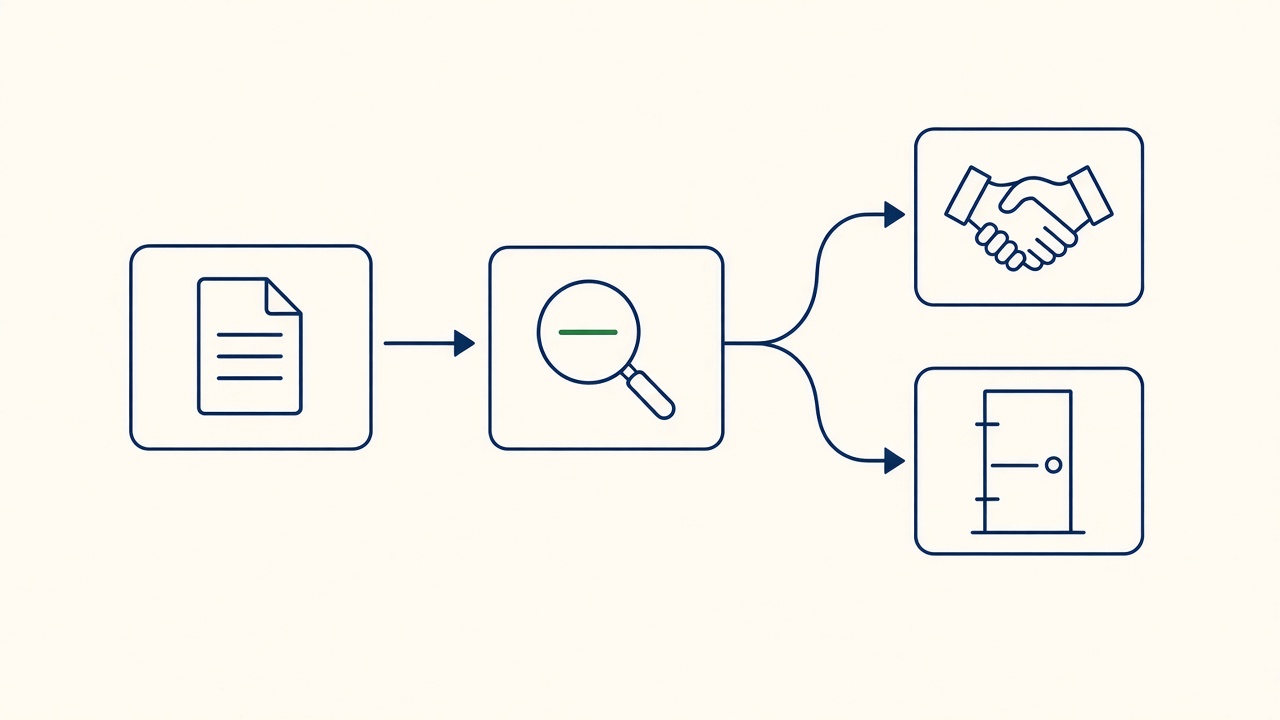
Read the value the selection criteria actually use
A framework agreement appoints suppliers who may receive later call-offs. The appointment can be worth having. The turnover and reference lines are often sized to the estimated value of the whole agreement, not to one order. Read which value those lines use before you treat the framework as the safer bid. A call-off under an agreement you are not on is not an open tender.
Some of the cost is reused: the registered company, the accounts, the certificates, and a login on the portal that actually takes the offer. The buyer’s clock is not reused. Questions, the deadline, the eligibility check and then the scoring still run. Spending that clock on a familiar title, and learning the eligibility result at the end, is the expensive version of the same weeks.
Two notices, one week
This example is fictional. Both notices describe the same maintenance work. Notice A asks for turnover and a certificate you hold, and one reference at a value you can show. The deadline is 18 days away, and the company is already registered on the submission portal. Notice B asks for three references, each above a value your largest contract does not reach, and it does not allow another entity to supply that experience. Notice A is the bid. Notice B is the one that feels familiar and will not be scored.
How Tender Town checks whether the bid is worth the days
Tender Town lists the requirements from the notice and the documents it fetches, with the figures still attached. Fit analysis sets those lines against the company evidence on a scope, and a line the file does not cover stays unknown.
Comments 0
Log in to comment.
No comments yet — start the conversation.